Speaker
Description
The increasing accuracy of the astrometric parameters expected of modern astrometric catalogs raises the question of to which extent subtle relativistic effects included in astrometric models are needed. The most interesting effect for astrometry is gravitational light deflection: according to general relativity, massive bodies bend the light rays on their way from a source to the astrometric satellite. In particular observations, the deflection angle due to the giant planets of the Solar System may amount to several milliarcseconds. However, an astrometric mission makes many observations of each source, and the deflection angle could be large for a few observations but very small in the remaining ones. Moreover, with increasing number of observed sources (Gaia with 2 billion vs. GaiaNIR with up to 50 billion sources), the number of observations affected by such 'rare' deflection effects will increase. Therefore, it is important to check how large the errors in the astrometric parameters would be if light deflection effects were not taken into account in astrometric models.
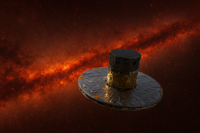
In this talk, we consider the example of Gaia and show the errors that would arise in the astrometric parameters when light bending effects were not included in the Gaia Relativity Model. We then compare these effects to expected astrometric accuracy levels in Gaia or GaiaNIR. This allows us to determine if the magnitude of the errors is actually comparable to the accuracy levels we are reaching in Gaia-like space astrometry missions. Along these lines, we also discuss the role that microlensing events by stars in the Galaxy or subtle deflections by other structures such as the asteroid belt may play in reaching an astrometric noise limit, that is, a limiting accuracy in the astrometric parameters which could not be surpassed due to practical limitations, namely the impossibility to control every deflecting body individually. This is particularly relevant for GaiaNIR, which aims to observe many more sources than Gaia and improve the astrometric accuracy for at least some parameters like proper motions.
Finally, we briefly discuss the interrelation between the Celestial Reference Frame and GaiaNIR astrometry.