Speaker
Description
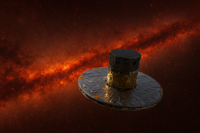
In the "Final recommendation from the Voyage 2050 Senior Committee", an ESA reference document similar to a NASA Decadal Survey, the Senior Committe considered that for the "From Temperate Exoplanets to the Milky Way" theme, a mission on the Characterisation of Temperate Exoplanets had a higher scientific priority. Should it be determined that this is not feasible, the Senior Committee recommended rather a focus on the Galactic Ecosystem with Astrometry in the Near-infrared. In the current landscape of on-going space mission development in Europe, the NIR astrometric mission is of course Gaia-NIR, while the temperate exoplanet characteriser is the Large Interferometer For Exoplanets (LIFE), which might compete with Gaia-NIR for the L5 slot. LIFE grows on the concepts already used by Darwin and Terrestrial Planet Finder-Interferometer. In parallel, NASA is developing its Next Great Observatory, dubbed Habitable Worlds Observatory (HWO), which may have important contributions from ESA (such as the POLLUX spectropolarimeter), CSA and even JAXA. China is also developing its own exolife-searching space mission, Tianlin. I will briefly summarise the status and basic properties of HWO, LIFE and Tianlin.