Speaker
Description
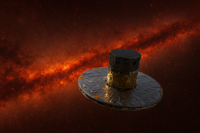
Thanks to large public spectroscopic surveys, we now possess a wealth of high-quality chemical-abundance data for Milky Way stars. This has significantly advanced our understanding of the Galaxy’s evolution and mass-accretion history, but these surveys remain inherently biased by their pre-selection requirements. Gaia overcomes many of these limitations by providing unparalleled all-sky astrometry and low-resolution spectrophotometry. Yet, even with the upcoming DR4, Gaia’s BP/RP spectra struggle to deliver precise chemical information for faint, distant stars, the very populations that hold the earliest record of Galactic assembly.
Here, multifilter surveys such as J-PLUS and J-PAS offer a powerful solution. Their high-S/N, multi-band photometry captures low-resolution SEDs with far greater sensitivity than Gaia XP at faint magnitudes, supplying crucial chemical constraints. In this talk, I will present results combining Gaia DR3 with J-Surveys photometry using BANNJOS, a Bayesian neural-network pipeline that delivers stellar classifications, atmospheric parameters, and elemental abundances with full posterior PDFs. This synergy, photometric chemistry from J-Surveys combined with Gaia’s astrometry, allows us to trace both the ages and chemical composition of stars deep into the Galactic halo.
The deeper XP spectra of Gaia DR4, together with forthcoming releases of J-PLUS and J-PAS, will further enhance this complementarity, paving the way toward the most detailed 3D chemical maps of the Milky Way to date.