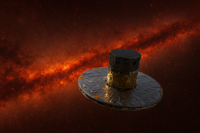
The increasing accuracy of the astrometric parameters expected of modern astrometric catalogs raises the question of to which extent subtle relativistic effects included in astrometric models are needed. The most interesting effect for astrometry is gravitational light deflection: according to general relativity, massive bodies bend the light rays on their way from a source to the astrometric...
Low-mass stars and brown dwarfs (M, L, and T types) dominate the stellar population of the Milky Way and are key to understanding Galactic structure and evolution. Their optical faintness and location in highly extincted regions limit current astrometric surveys. Gaia has revolutionized our view of nearby low-mass stars through precise astrometry and photometry, but its sensitivity decreases...
White dwarfs are the most common stellar remnants and are widely used as reliable cosmic chronometers, providing important insights into the evolution and history of the Galaxy. Observations in the near-infrared (NIR) open unique opportunities, including the detection of circumstellar disks and substellar companions, as well as studies of the composition of accreted extrasolar planetary...
GaiaNIR has the potential to significantly advance exoplanet science. By extending high-precision astrometry to cooler and more obscured stars, it would broaden the range of both stellar and planetary environments accessible to astrometric planet detection. Combined with Gaia, this new instrument would provide a decades-long astrometric baseline, enabling the discovery and mass measurement of...