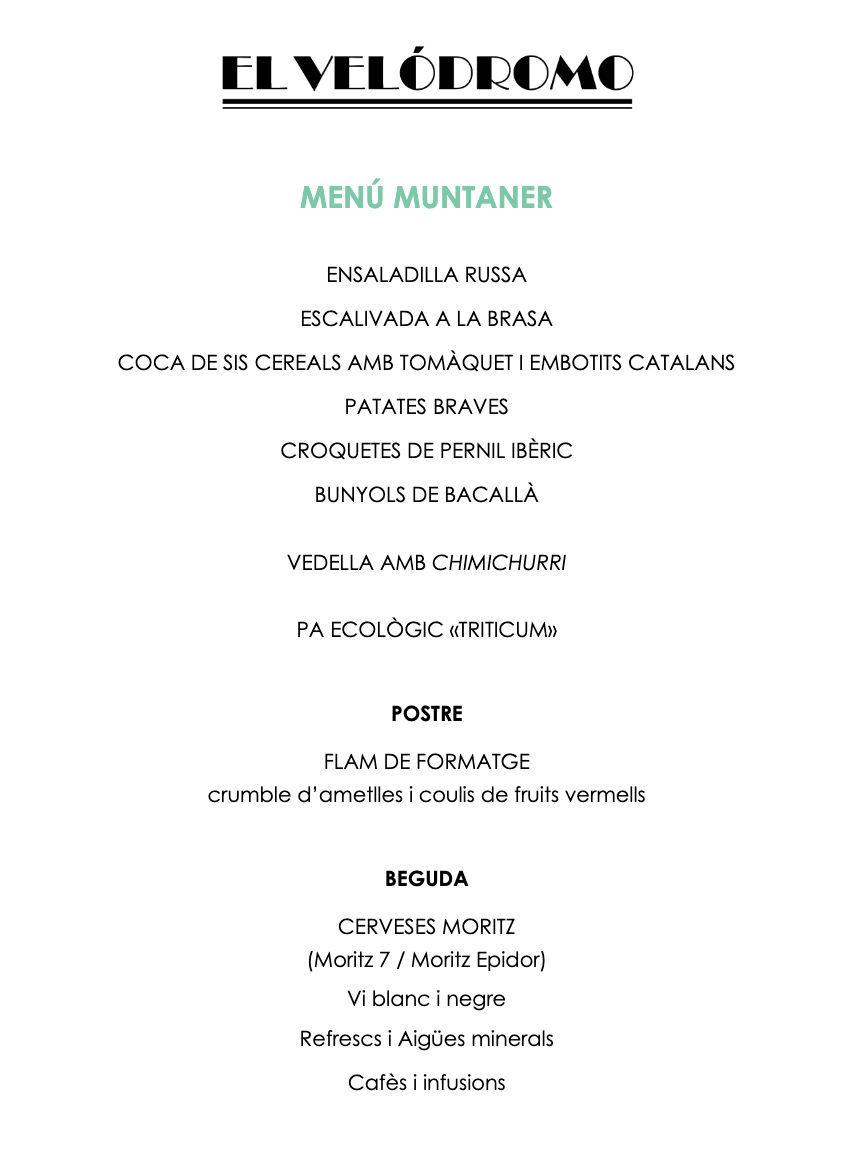
El Velódromo is one of Barcelona’s most iconic and long-lived bars and restaurants, deeply woven into the city’s social and cultural history. It originally opened in 1933 on Carrer de Muntaner in the Eixample district, designed with a warm interior that blended classic and art déco elements, making it an attractive gathering spot from the outset.
Throughout its early decades, El Velódromo became a meeting place for politicians, intellectuals, and artists, hosting members of the republican government during the Spanish Civil War and later serving as a hub for the Gauche Divine cultural movement in the 1960s and 70s. It also played a role in important social moments, such as hosting committees linked to city events like the tram strike in 1951.
In the 1980s and 1990s, the bar was a fashionable nightlife spot for Barcelona’s youth and cultural scene, remembered for its terrace café culture, friendly atmosphere, and vibrant conversations.
After nearly seven decades in operation, the original owner retired and closed the bar in 2000. Recognizing its historic and architectural value, the well-known Catalan brewer Cerveses Moritz acquired the venue, spearheading a restoration that preserved key features like the wooden staircase, billiard table, and classic art déco details.
In 2009, El Velódromo reopened as both a restaurant and cultural meeting point, blending traditional Catalan gastronomy with its historic ambiance. A central figure in El Velódromo’s gastronomic revival has been chef Jordi Vilà, a celebrated Catalan chef with a Michelin star who serves as the restaurant’s director gastronómico.